


7 Dangerous Ways Steamy Baths Steal Your Body's Natural Oils
Understanding how steamy baths steal your body’s natural oils is essential if you step out of the shower with dry, tight, or itchy skin. That long, hot shower might feel like the ultimate escape after a tiring day. But beneath the soothing warmth, your skin loses the vital lipids needed to stay soft and resilient.
Alt Text: Steamy baths steal your body’s natural oils leaving skin dry and tight
There is no denying the psychological comfort of hot water. It relaxes tense muscles, releases steam into the bathroom, and melts away daily stress.
However, when your skin turns red, itchy, or flaky afterward, your bathing habits are working against your skin barrier. Clean skin does not require stripping away every trace of protective surface lipids.
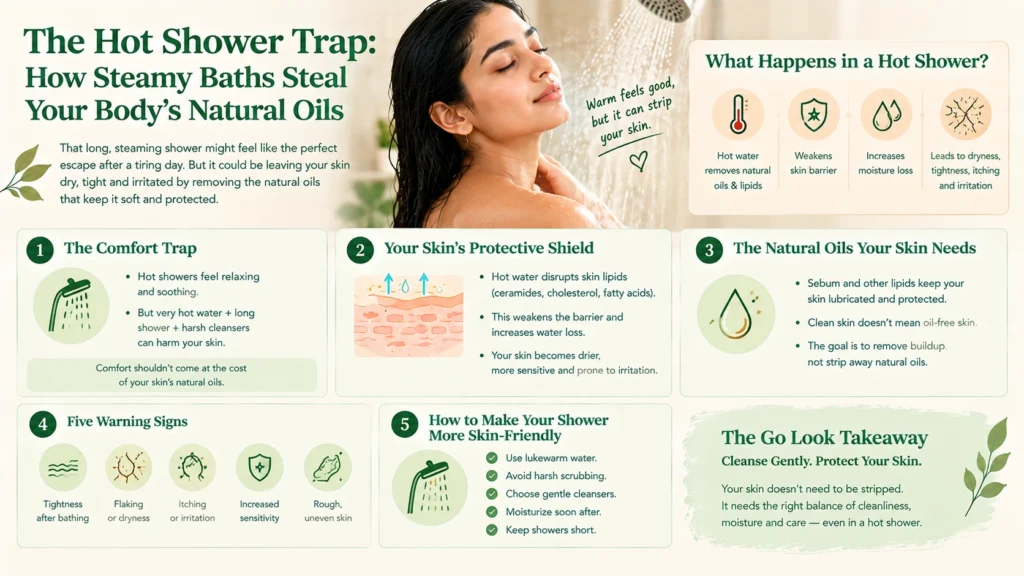
1. The Comfort Trap: Why Hot Showers Feel So Good
A hot shower offers immediate physical comfort by easing muscle tension and soothing the nervous system.
The main issue is not mild warmth, but excessive heat combined with prolonged exposure. High water temperatures dissolve essential surface lipids—including ceramides, cholesterol, and fatty acids—that lock in moisture.
Combining scalding water with harsh soaps strips away these natural fats, leaving your skin defenseless against environmental irritants.
2. How Steamy Baths Steal Your Body's Natural Oils
Why do steamy baths steal your body’s natural oils so rapidly? High heat functions as an emulsifier, breaking down the lipid layers that seal your skin cells together.
[ Scalding Hot Water + Long Duration ]
                  │
                  ▼
   [ Dissolves Essential Surface Lipids ]
                  │
                  ▼
 [ Transepidermal Water Loss (TEWL) Spikes ]
                  │
                  ▼
   [ Tightness, Redness & Severe Flaking ]
When high water temperatures wash away these crucial fats, water escapes rapidly through transepidermal water loss. The outer layer shrinks, leaving your skin rough, dry, and sensitive.
To learn more about skin barrier health and lipid restoration, consult clinical guidelines at the American Academy of Dermatology Association or review dermatological articles on WebMD.
3. The Natural Protective Shield Your Skin Needs
Your skin barrier functions like a brick wall: skin cells are the bricks, and lipids act as the mortar holding them together.
This barrier limits water loss while blocking environmental pollutants. Sebum and stratum corneum lipids preserve moisture to keep skin comfortable.
Effective bathing removes dirt, sweat, and excess bacteria without destroying this natural protective mortar.
4. Five Warning Signs Your Shower May Be Too Hot
Immediate Skin Tightness: Feeling stretched or uncomfortable right after drying off signals severe lipid stripping.
Ashy or Flaky Appearance: White flakes on shins, elbows, or knees indicate barrier breakdown.
Post-Shower Itching: High heat triggers histamine release and aggravates dry skin nerves.
Persistent Redness and Stinging: Red, inflamed skin means heat has caused vasodilation and barrier damage.
Ineffective Body Lotions: If rich moisturizers fail to relieve dryness, high shower heat is likely continuously stripping your skin.
5. The Three-Part Shower Mistake: Heat, Time, and Cleansing
Three everyday habits combine to worsen post-shower dryness:
Extreme Heat: Water that turns skin bright red damages delicate lipids. Switch to lukewarm temperatures instead.
Prolonged Duration: Showers longer than 10 minutes increase lipid leaching. Dermatologists recommend keeping showers under 10 minutes.
Aggressive Body Washes: Alkaline bar soaps and heavy synthetic fragrances strip protective lipids. Choose mild, fragrance-free cleansers focused on underarms, feet, and skin folds.
6. The Perfect Shower Routine for Soft, Comfortable Skin
Protect your skin barrier with this 5-step shower routine:
Use Lukewarm Water: Set the temperature to comfortably warm, avoiding excessive steam.
Limit Shower Time: Keep your total time under running water between 5 and 10 minutes.
Cleanse Gently: Use a gentle, pH-balanced cleanser and avoid rough scrubbing sponges.
Pat Dry Carefully: Gently pat your skin dry with a soft towel, leaving it slightly damp.
Moisturize Within 3 Minutes: Apply a ceramide-rich lotion or ointment immediately to lock in dampness.
7. Interactive Skin Check: Is Your Routine Helping or Hurting?
Question 1: What is your typical shower temperature?
A) Comfortably warm or lukewarm.
B) Very hot with dense steam filling the room.
C) Scalding hot, leaving skin flushed and red.
Question 2: How does your skin feel 5 minutes after drying off?
A) Soft, calm, and comfortable.
B) Slightly dry or tight across arms and legs.
C) Highly irritated, itchy, or noticeably flaky.
What Your Results Mean:
Mostly A: Your shower routine supports a healthy skin barrier.
Mostly B: High temperatures or long showers are beginning to compromise your skin. Lower the heat and apply moisturizer on damp skin.
Mostly C: Steamy baths steal your body’s natural oils and damage your skin barrier. Switch to short, lukewarm showers and use gentle cleansers immediately.
Does Hot Water Cause Premature Skin Ageing?
While hot water does not directly break down dermal collagen like ultraviolet sun exposure does, chronic dehydration makes fine lines and surface texture appear far more pronounced.
Keeping your skin barrier healthy maintains elasticity, smoothness, and suppleness over time.
Special Care for Different Skin Types
Dry Skin: Stick to 5-minute lukewarm showers and apply heavy creams containing ceramides or petrolatum.
Oily Skin: Avoid harsh scrubbing. Stripping surface oil with hot water can cause rebound irritation.
Sensitive Skin: Avoid added fragrances, hot water, and physical exfoliation.
Eczema-Prone Skin: Keep water lukewarm, use soap-free cleansers, and lock in moisture immediately after bathing.
The Myth of the Squeaky-Clean Feeling
A “squeaky” feeling on your skin after showering is not a sign of cleanliness—it indicates that protective surface lipids have been completely stripped away.
Properly cleansed skin should feel soft, calm, and hydrated, not tight or dry.
Go Look Takeaway
Now that you know how steamy baths steal your body’s natural oils, you can easily protect your skin without sacrificing a relaxing shower. Lower the water temperature to lukewarm, shorten your showers to 5–10 minutes, use gentle cleansers, and lock in moisture while your skin is still damp.
