


Cracked Heels: 7 Powerful Ways to Beat Rough Skin in Humid Weather
Cracked heels can become rough, thick, and painful even when the weather is humid. Humidity makes the air feel heavy, your skin feel sticky, and your feet sweat more than usual. But why do your heels become rough, leathery, and painfully cracked even when the weather is humid?
It seems contradictory. If moisture is everywhere, shouldn’t your feet stay soft?
Not necessarily.
Your feet have a unique skin structure, and humidity, sweat, friction, footwear, and dead skin buildup can combine to create the perfect conditions for rough, leathery heels.
The real secret to healthier feet isn’t simply adding more moisture. It’s understanding why your skin becomes thick, loses flexibility, and starts cracking in the first place.
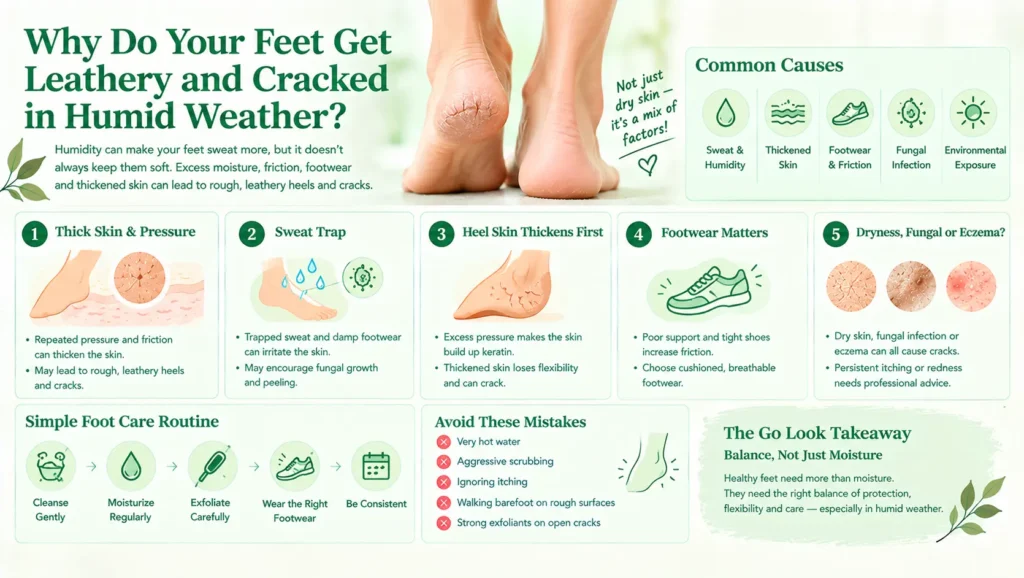
1. Why Humid Weather Can Make Cracked Heels Rougher
Your heels carry much of your body weight throughout the day. Unlike many other areas of your body, the skin on your soles has a naturally thick outer layer to withstand pressure and friction.
When you walk for hours, wear tight footwear, or repeatedly expose your feet to rubbing and pressure, the skin may respond by building up more protective layers of dead cells.
This buildup is called hyperkeratosis.
Over time, the skin can become:
- Thick and leathery
- Rough and uneven
- Yellowish around the heels
- Less flexible when walking
- Prone to deep cracks or fissures
Humidity doesn’t directly cause every case of cracked heels. However, sweaty feet, damp footwear, and increased friction may contribute to irritation and other foot problems.
The important distinction: Thick heel skin often develops because of pressure and friction, while cracking occurs when that thickened skin loses flexibility and can no longer stretch comfortably.
2. The Sweat Trap: When Moisture Becomes a Problem
Your feet contain numerous sweat glands, making them particularly prone to sweating.
In humid weather, sweat evaporates less efficiently. If your feet remain inside closed shoes for hours, moisture can accumulate around the skin.
This creates two possible problems.
First, excess moisture can soften the skin. Prolonged dampness may cause maceration, where the skin becomes overly soft, pale, or wrinkled. This can make it more vulnerable to friction and damage.
Second, the combination of sweat and occlusive footwear can encourage fungal growth. Conditions such as athlete’s foot may cause itching, peeling, scaling, and cracking, especially between the toes or along the soles.
For more information, read this Indian Express guide to preventing fungal infections during the monsoon.
So, while humidity doesn’t automatically dry out your feet, it can create conditions that contribute to several different skin problems.
The solution is not to keep your feet constantly wet or to avoid moisturizing altogether. It is to manage sweat, protect the skin, and address the underlying cause.
3. Why Your Heels Become Thick Before They Crack
Think of your heel skin as a flexible protective cushion.
When pressure and friction repeatedly affect the same area, the skin may develop a thicker layer of keratin. Initially, this is a protective response.
But excessive thickening can become a problem.
As the buildup increases, the skin may become less flexible. When you stand or walk, the heel expands under your body weight. If the thickened skin cannot stretch sufficiently, small splits may develop.
These splits can gradually deepen into painful cracks.
Common contributing factors include:
- Standing for long periods
- Walking barefoot on hard surfaces
- Wearing open-backed sandals
- Ill-fitting shoes
- Naturally dry skin
- Certain skin conditions, including eczema and psoriasis
Remember: Cracked heels are not always caused by a lack of moisturizer. Sometimes, excessive pressure and thickened skin are the bigger issues.
The Times of India guide to cracked heel care also discusses moisturizing, gentle exfoliation, and comfortable footwear as parts of foot care.
4. Your Footwear Could Be Making Things Worse
In hot and humid weather, open sandals and slippers often feel more comfortable than closed shoes.
However, footwear that provides little heel support may allow the heel’s fatty pad to spread sideways with each step. This can place additional stress on the surrounding skin.
At the same time, tight or poorly ventilated shoes may trap sweat and increase friction.
Look for footwear that offers:
- Comfortable cushioning
- A secure fit
- Adequate ventilation
- Good heel support
- Minimal rubbing around the heel and toes
Rotate damp shoes when possible and allow them to dry fully before wearing them again.
Small footwear changes can make a meaningful difference when pressure and friction are contributing to cracked heels.
5. Is It Dry Skin or a Fungal Infection?
Not every rough, peeling foot needs the same treatment.
Understanding the difference can help you avoid making the problem worse.
Dry, thickened heel skin :
Usually appears as rough, hardened skin around the heel edges. It may have yellowish patches and visible cracks, particularly where pressure is greatest.
Athlete’s foot :
May cause itching, burning, peeling, scaling, or cracking between the toes. It can also affect the soles and sides of the feet.
Eczema or psoriasis :
May cause persistent redness, scaling, inflammation, or thickened patches that extend beyond the heels.
These conditions can overlap, so appearance alone may not always provide a definite diagnosis.
If your feet are persistently itchy, inflamed, or peeling, consider consulting a healthcare professional before applying strong exfoliants or treating the problem as simple dryness.
6. How to Treat Leathery, Cracked Heels in Humid Weather
The goal is to soften thickened skin gradually while protecting the healthy skin underneath.
Step 1: Cleanse Gently
Wash your feet with lukewarm water and a mild cleanser. Avoid prolonged soaking, particularly if your skin becomes soft or wrinkled afterward.
Dry carefully, especially between the toes.
Step 2: Choose the Right Moisturizer
For mild dryness, a regular moisturizer may be sufficient. For pronounced thickening, a urea-based foot cream may be more useful.
Apply moisturizing products to the heels and soles, but avoid leaving thick layers of cream between the toes, where excess moisture can accumulate.
If your skin is deeply cracked, raw, or bleeding, avoid applying strong exfoliating acids or high-strength urea products directly to the open areas.
Step 3: Exfoliate Without Overdoing It
If your heels have thick, hardened skin but no open cracks, gentle exfoliation may help.
Use a foot file lightly on softened skin, and avoid aggressive scraping or sharp blades.
Never attempt to cut away thickened skin yourself. Excessive removal can cause wounds and infection.
Step 4: Manage Sweat
Choose breathable footwear and moisture-wicking socks. Change socks when they become damp, and let shoes dry thoroughly between uses.
If sweating is persistent or severe, a pharmacist or healthcare professional can advise you on suitable options.
Step 5: Reduce Pressure on Your Heels
Choose cushioned, supportive footwear and avoid walking barefoot on hard surfaces for long periods.
If heel cracks keep returning, pressure management may be just as important as your skincare routine.
7. A Simple Humid-Weather Foot Care Routine
You don’t need an elaborate routine to maintain softer feet.
Morning
- Wash and dry your feet thoroughly.
- Use breathable footwear and clean, dry socks.
- Apply a suitable moisturizer to dry heel areas if needed.
Evening
- Cleanse gently and dry your feet.
- Apply a urea-based foot cream to thickened, intact heel skin if appropriate.
- Check for new cracks, redness, itching, or peeling.
Once or Twice a Week
- Consider gentle filing if excess hard skin is present and the skin is intact.
- Stop if you experience pain, redness, or irritation.
Consistency matters more than aggressive treatments. Avoid trying to remove all the thickened skin at once.
For additional foot-care ideas, see this Times of India guide to keeping feet soft and smooth.
Common Foot Care Mistakes to Avoid
Even well-intentioned habits can make cracked heels worse.
Avoid very hot water. It may increase dryness and irritation.
Don’t scrub aggressively. Excessive friction can damage healthy skin.
Don’t ignore persistent itching. A fungal infection may require antifungal treatment rather than moisturizer alone.
Don’t walk barefoot on rough surfaces. Repeated pressure and friction can worsen thickened skin.
Don’t apply strong exfoliants to open cracks. They can cause significant irritation.
Don’t delay medical attention for infected-looking cracks. Increasing redness, warmth, swelling, discharge, or worsening pain needs prompt assessment.
If you have diabetes, poor circulation, or reduced sensation in your feet, seek professional advice early and avoid self-treating cracks or removing hard skin yourself.
The Go Look Takeaway: Humidity Isn't the Whole Story
Leathery, cracked heels can seem confusing during humid weather. But the explanation often lies in the interaction between thickened skin, repeated pressure, friction, sweat, and the condition of your skin barrier.
Humidity may contribute to dampness and fungal problems, while thickened heel skin can remain rough and inflexible despite the moisture in the air.
The most effective approach is to manage sweat, reduce friction, soften excess hard skin carefully, and moisturize consistently.
And remember: if your feet are painful, deeply cracked, bleeding, or persistently peeling, don’t assume that dryness is the only cause.
Healthy feet need more than moisture. They need the right balance of protection, flexibility, and care.
Explore Go Look for more natural skincare and everyday wellness content.
Go Look – Your Natural Wellness Starts Here
