


5 Reasons Why Your Face Looks Oily Even When Skin Is Dehydrated
When your face looks oily even when skin is dehydrated, managing your daily skincare routine can feel endlessly frustrating. Your forehead shines, your T-zone feels greasy, yet your cheeks feel tight or flaky. You might feel tempted to scrub your skin or apply harsh oil-control toners.
However, your complexion doesn’t necessarily need less oil. Often, it desperately needs targeted hydration.
This paradox—where your face shines like glass while feeling raw underneath—is one of the most common issues in dermatology. Understanding the distinction between oil and water changes everything.
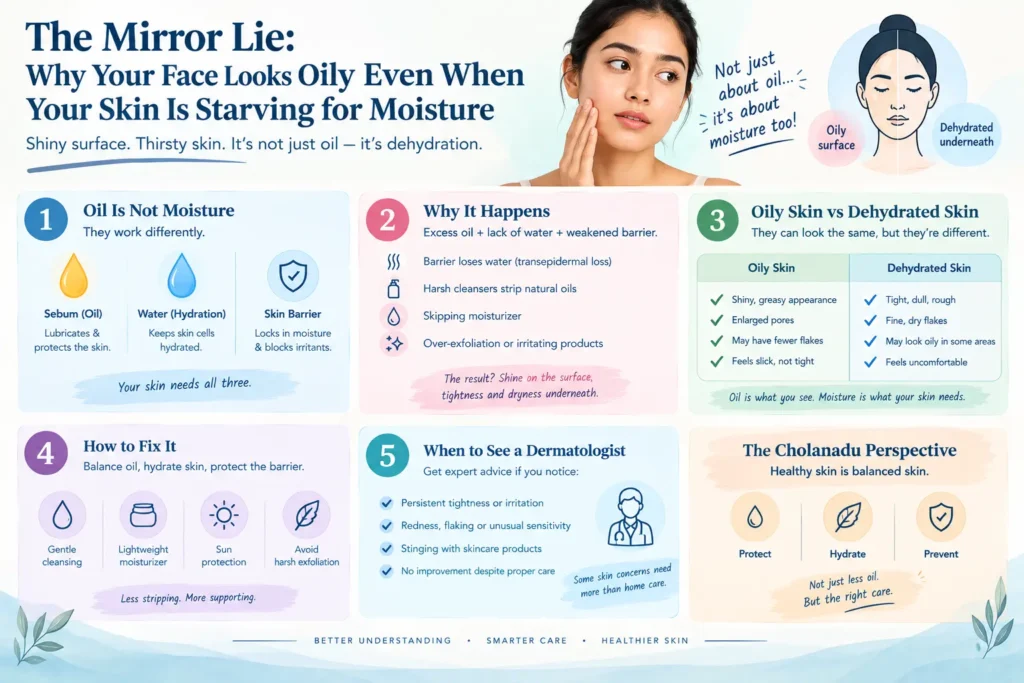
1. The Great Skincare Confusion: Oil Is Not Moisture
A widespread misconception is that oily skin is inherently well-hydrated. In reality, oil (sebum) and water perform entirely different jobs.
Sebum: Produced by sebaceous glands to lubricate the skin surface.
Water (Hydration): Kept inside cells to maintain a plump, supple barrier.
When your skin barrier is compromised, water escapes easily via transepidermal water loss. Even as your pores pump out sebum to compensate, your actual skin cells remain parched.
For deep insights into skin barrier function, explore scientific guides at the American Academy of Dermatology Association
2. Why Your Face Looks Oily Even When Skin Is Dehydrated
Why does your face looks oily even when skin is dehydrated? The root causes usually trace back to these specific triggers:
1. Using Overly Harsh Cleansers
Washing with high-pH soaps leaves your skin feeling squeaky clean, stripping away vital lipids and forcing the skin into a cycle of irritation and surface sheen.
2. Skipping Lightweight Moisturizers
Avoiding moisturizers out of fear of breakouts only worsens dehydration, leaving your skin defenseless against environmental stressors.
3. Over-Exfoliating Active Ingredients
Stacking glycolic acid, retinoids, and physical scrubs destroys your outer moisture barrier, making your complexion look shiny and feel irritated simultaneously.
3. The Hidden Difference Between Oily Skin and Dehydrated Skin
Oily Skin: Characterized by overactive sebaceous glands, noticeable shine across the entire face, and enlarged pores.
Dehydrated Skin: Characterized by a lack of water content, resulting in dullness, rough texture, tight facial muscles, and localized flaking.
You can easily have combination skin that is naturally oily while simultaneously experiencing surface dehydration from weather or aggressive products.
4. Is Your Skin Producing More Oil Because of Dehydration?
While popular beauty myths claim dry skin automatically pumps out oil to compensate, actual dermatological science shows sebum production is driven primarily by genetics, hormones, and ambient temperature.
Instead, dehydration damages your protective barrier, making your face look uneven, tight, and hypersensitive while natural sebum sits unabsorbed on top of parched cells.
5. The Indian Climate Factor: Heat, Humidity, and AC
Managing a complexion where your face looks oily even when skin is dehydrated is exceptionally difficult across Indian climates.
Intense outdoor heat increases sweat and sebum production, while continuous exposure to indoor air conditioning strips moisture straight out of your skin cells.
By midday, your nose is greasy, but by evening, your cheeks feel paper-dry. The ideal solution is balancing oil control with lightweight, humectant-based hydration rather than stripping your skin bare.
How to Restore Moisture Without Making Your Face Greasier
Cleanse Gently: Use a mild, hydrating facial wash twice a day with lukewarm water.
Incorporate Humectants: Look for serums containing hyaluronic acid, glycerin, or panthenol to pull moisture into skin cells.
Apply a Gel-Cream Moisturizer: Choose non-comedogenic, oil-free moisturizers to lock hydration in without clogging pores.
Wear SPF Daily: Protect your recovering skin barrier with a broad-spectrum sunscreen rated SPF 30 or higher.
Give It Time: Allow your skin barrier 2 to 4 weeks of consistent, gentle care to fully recover its natural equilibrium.
Skincare Mistakes That Keep the Oily-Dehydrated Cycle Going
❌ Washing Every Time Your Face Shines: Strips away essential moisture barriers.
❌ Using Alcohol-Based Toners: Creates a false matte finish while severely dehydrating underlying tissue.
❌ Layering Too Many Actives: Overloading skin with multiple acids breaks down protective lipids.
Go Look Takeaway
When your face looks oily even when skin is dehydrated, stop fighting your skin with aggressive oil-stripping products. Focus on gentle cleansing, lightweight humectants, and barrier-supporting moisturizers. Listening to what your skin actually needs will transform your complexion into a healthy, balanced state.
